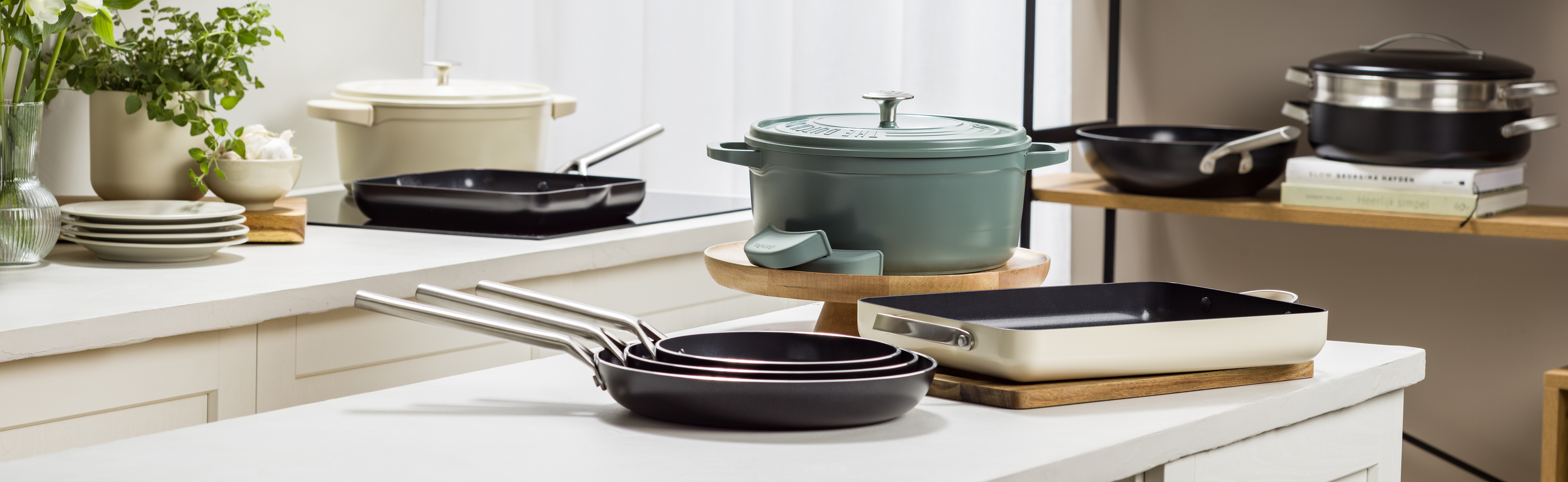
Non-stick coating Forma Collection
No, your GreenPan cookware does not contain any intentionally added PFAS. The non-stick coating of your GreenPan frypan, skillet, or wok consists of a ceramic non-stick coating. The basic raw material is a derivative of sand which is transformed into a sprayable solution by a Sol-Gel process. No harmful chemical PFAS substances are used in this process. This solution is then sprayed - without the use of adhesives or additives - onto the pan. The pan then goes into the oven to harden.
In order to make optimal use of your non-stick coating and prevent it from being damaged, we would like to point out the following care & use instructions:
1. Do not rush the preheating process by using excessive heat.
For optimal frying results, start by heating the pan for a few seconds at a low to medium heat before adding oil or butter. Do not heat your pan by using the maximum temperature of your hob.
2. Never overheat the fats you use in the pan
Fats start to carbonize when they are overheated, this damages the coating of your pan. How fast fat carbonizes depends on the type of oil or butter you use and their smoking point. Use only fats with a high smoking point such as sunflower oil, canola oil,.... Do not use extra vierge olive oil and refrain from using spray oils.
3. Wear and tear of your cookware and its non-stick coating is normal. Over time there is a natural reduction of your pan’s non-stick properties. This process is accelerated by prolonged exposure of the non-stick surface to high heat, which causes carbonisation of food and oil.
4. Never use metal utensils on a non-stick surface. Do not cut foods while they are in the cookware or use sharpe-edged items as it may scratch or cut the non-stick surface. Plastic, rubber or wooden utensils are recommended to protect your cookware’s non-stick finish.
5. Allow cookware to air cool before cleaning thoroughly after every use.
6. If carbonisation of food and oil on your non-stick coating occurs, or there are difficult to clean food deposits, after cleaning, partially fill the cookware with hot water and a little detergent. Quickly bring the water to the boil. This helps to loosen the food deposits from the coating. After draining the pan, scrub the pan with a soft sponge using hot soapy water.
7. Storing cookware along with other metal implements can cause scratches or chipping on the surface of the non-stick coating. Usage of pan protectors in between two pans is adviced for ultimate protection of the non-stick coating.